IPR Loophole… Closed For Now
As far as IPRs are concerned, it doesn’t matter who owns a patent, whether the owner be an Indian tribe or a group of kindergarten students.
As far as IPRs are concerned, it doesn’t matter who owns a patent, whether the owner be an Indian tribe or a group of kindergarten students.

Tribal sovereign immunity being asserted in IPRs is looking more and more questionable.
Confronting Biglaw’s ‘snake eating its own tail’ problem.
Domestic or foreign law, district court or the Patent and Trademark Office, judge or jury? These questions matter.

Unified’s CEO has graciously agreed to a written interview -- one that’s timely in the immediate aftermath of the Supreme Court’s recent rulings on the constitutionality and implementation of IPRs.
Unified’s CEO has graciously agreed to a written interview -- one that’s timely in the immediate aftermath of the Supreme Court’s recent rulings on the constitutionality and implementation of IPRs.
Why should a government agency not be able to correct its own mistakes?
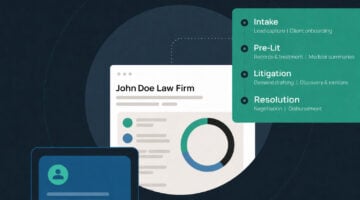
Every new tool a PI firm buys solves one problem and connects nothing. The real fix isn't another purchase — it's keeping the whole case in one place, from accident to resolution. Here's how.
The Federal Circuit will continue in its efforts to bring uniformity to patent law, and will not shy away from challenges presented by the America Invents Act.
This conference proved that companies and IP lawyers require a comprehensive understanding of the IPR process.
Erroneously granted patents do not help anyone and certainly do not further the very purpose of the patent system as set forth by the Constitution.

Here are three big reasons why, according to IP columnist Tom Kulik.

goLateral is a quiet window into what's actually out there. Joining takes two minutes, costs nothing, pays you $100, and stays completely confidential.

Columnist Gaston Kroub interviews Manny Schecter, a leading voice in the IP community.
If this tactic is allowed, it will be a big win for Big Pharma -- and a big loss for patients and consumers.

When the underlying technology is so potentially valuable, companies will go to war on multiple fronts.

The Supreme Court just agreed to decide a profoundly important question in patent law right now.

This Biglaw partner brings pharma experience to law firm cases.